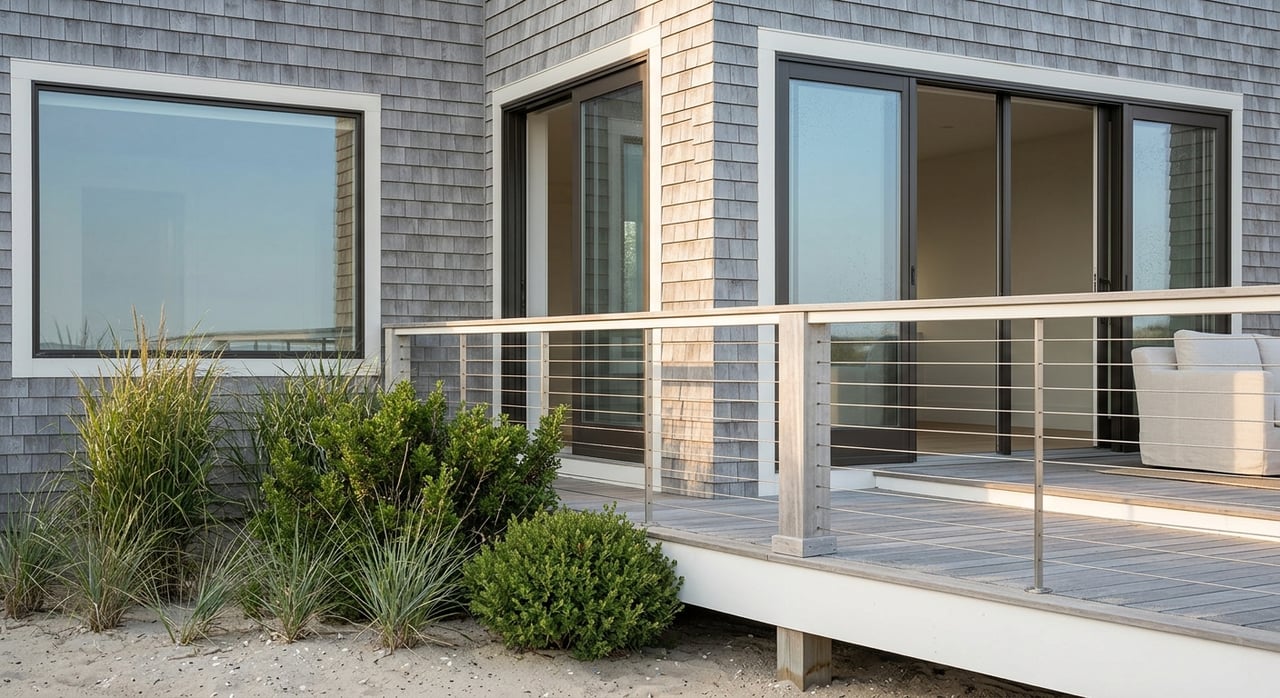
Pricing Strategy For Duck Oceanfront Sellers
If you own an oceanfront home in Duck, pricing it right is not a small detail. It is one of the biggest factors shaping how quickly your home gets attention and how seriously buyers engage. In today’s market, buyers are still active, but they are weighing value with more care, especially on premium coastal properties. This is where a smart, well-supported pricing strategy can make all the difference. Let’s dive in.
The latest numbers point to a market that is active, but selective. In the Outer Banks Association of REALTORS’ April 2026 report, Duck recorded 32 year-to-date residential sales through April, which was up 14% from the same period in 2025. Average days on market dropped to 55 from 109, while the median sales price came in at $858,250, down 15% year over year.
That mix matters. Homes are selling faster, which suggests buyers are still in the market, but the lower median price signals that buyers may be more price conscious than they were a year ago. For oceanfront sellers, that means your launch price needs to feel grounded in what buyers will support right now, not just what the market may have supported at a past peak.
Duck also continues to hold a premium position within the northern Outer Banks. The same report shows Duck’s median sale price above Corolla’s $833,750 and Kitty Hawk’s $718,500. That premium is real, but it does not mean every oceanfront home should push the top of the range without strong support.
Duck is a relatively small market, and that changes how pricing should work. With only 32 residential sales reported through April 2026, the pool of direct comparisons is limited. In a thin market, even a small pricing miss can have a bigger impact because buyers have fewer examples to benchmark against, and sellers have less room to hide behind broad averages.
This is especially true for oceanfront property. Two homes can both be oceanfront and still have very different value depending on access, condition, dune setting, updates, and carrying costs. That is why a townwide median price is only background context, not a pricing formula.
The strongest pricing strategy starts with the sales comparison approach. That means looking at the most comparable recent sales, contract sales, and current listings, then adjusting for meaningful differences. For a Duck oceanfront home, those differences may include frontage, beach access, maintenance level, upgrades, and timing.
This sounds simple, but it requires discipline. It is easy to anchor to what you want your home to be worth or to another property that feels similar on the surface. The better approach is to look closely at the homes buyers would truly compare to yours and build the price from there.
A true comp is more than a nearby sale. It should be similar in location, oceanfront orientation, access experience, condition, and overall utility. If a direct Duck oceanfront comp is not available, it may help to study a very similar nearby oceanfront sale or a closely related active or pending listing to understand current buyer behavior.
The key is to avoid stretching too far. The more adjustments a comp needs, the less reliable it becomes. In a market as specific as Duck oceanfront, accuracy matters more than volume.
In Duck, beach access is a real pricing factor. The town says it does not own or maintain public beach access locations, does not allow parking along state roads, and does not offer public parking at beach accesses. Access is limited to Duck residents, Duck renters, and their guests through privately owned and maintained access points.
That makes the quality and convenience of access especially important for an oceanfront home. A property with cleaner, easier, and more direct access to the sand may support a different price discussion than one with a more awkward or less appealing route. Buyers are not only buying the structure. They are also buying the day-to-day experience of using the home.
It is tempting to think beach access comes down to how many steps it takes to reach the sand. In reality, buyers often notice more than that. They pay attention to how the walkover feels, how well the access appears maintained, and how smoothly the home connects to the beach environment.
For that reason, pricing should reflect the access experience with care. If your home offers a particularly convenient or well-kept path to the beach, that detail should be part of the pricing analysis and marketing story.
Beach nourishment and shoreline condition matter in Duck. The town completed its 2023 nourishment project on May 14, 2023, placing about 550,000 cubic yards of sand along roughly 1.7 miles of shoreline. The town describes nourishment as a way to maintain wide beaches that help protect upland areas and provide storm protection.
For sellers, this matters because buyers often look closely at the beach environment around an oceanfront home. They may weigh how close the home feels to the active beach, how stable the dune line appears, and whether the stretch of shoreline feels well maintained. These details may not fit into a simple formula, but they can shape what buyers are willing to pay.
When a buyer evaluates your oceanfront home, they are not just pricing the purchase. They are also thinking about what it costs to own. In Duck for fiscal year 2025-2026, the town property tax rate is 0.1800, with an MSD-A beach nourishment rate of 0.0798 for all properties in the project area and an MSD-B rate of 0.1890 for oceanfront properties from the U.S. Army Corps of Engineers area to Oyster Catcher Lane.
The town also notes that future rates may change depending on nourishment debt needs, including the next cycle in 2027. That does not mean buyers will walk away, but it does mean many will factor those costs into their offer decisions. A strong pricing strategy accounts for what buyers will see as the full ownership picture.
Flood insurance pricing now uses property-specific factors such as flood frequency, types of flooding, coastal erosion, distance to water, elevation, and rebuild cost. At the same time, NOAA continues to identify hurricanes, coastal storms, coastal erosion, and sea-level rise as major threats to coastal communities.
Duck’s CAMA guidance also notes that the oceanfront area adjacent to the frontal and primary dune system is subject to greater flood and erosion risk. For sellers, the takeaway is simple: buyers may place more value on homes with a clear, understandable risk profile than on homes where the risk or documentation feels uncertain.
A turnkey oceanfront home can often compete differently than a home with visible deferred maintenance. Buyers compare roof condition, siding, windows, mechanical systems, storm-hardening work, and the overall level of care. If your home feels move-in ready and well maintained, that can support a stronger pricing position.
Just as important, your updates need to be documented. Duck’s Community Development guidance says most construction activities, including accessory structures, swimming pools, hot tubs, and HVAC work, require a building or trade permit. If you have added or improved a deck, walkover, pool, or other feature, permit history should be reviewed before launch.
A well-prepared seller can help reduce buyer hesitation. Before your home goes live, it helps to organize:
When buyers see a clean, complete file, they often feel more confident about the home and the asking price.
Overpricing can look tempting, especially when your property sits in a premium location. But in a market where buyers are active and selective, an unsupported number can slow momentum. Even strong homes can lose leverage if they enter the market above what the best comps and current conditions support.
A better strategy is to launch with a price that makes sense on day one. This gives you the best chance to attract serious attention early, when your listing is freshest and buyers are paying the closest attention. In a small market like Duck, that early window matters.
A strong pricing strategy for a Duck oceanfront seller usually includes a few clear steps:
This approach is both practical and strategic. It respects Duck’s premium standing while staying grounded in how buyers actually make decisions.
Oceanfront pricing in Duck is highly specific. The market is small, the inventory is specialized, and the value drivers go far beyond square footage. Access, dune condition, carrying costs, documentation, and current buyer behavior all play a role.
That is why local knowledge matters so much. A pricing strategy built for a general coastal market is not enough. You need a pricing conversation shaped by the nuances of Duck itself, with careful attention to the details that can move value up or down.
If you are thinking about selling your Duck oceanfront home, a calm, data-driven pricing plan can help you enter the market with confidence. For tailored guidance backed by local insight and a polished marketing approach, connect with Inna Pencheva.



Contact Inna today to start your home journey. With a commitment to education and transparency, she guides clients confidently through every step of the buying or selling process.
