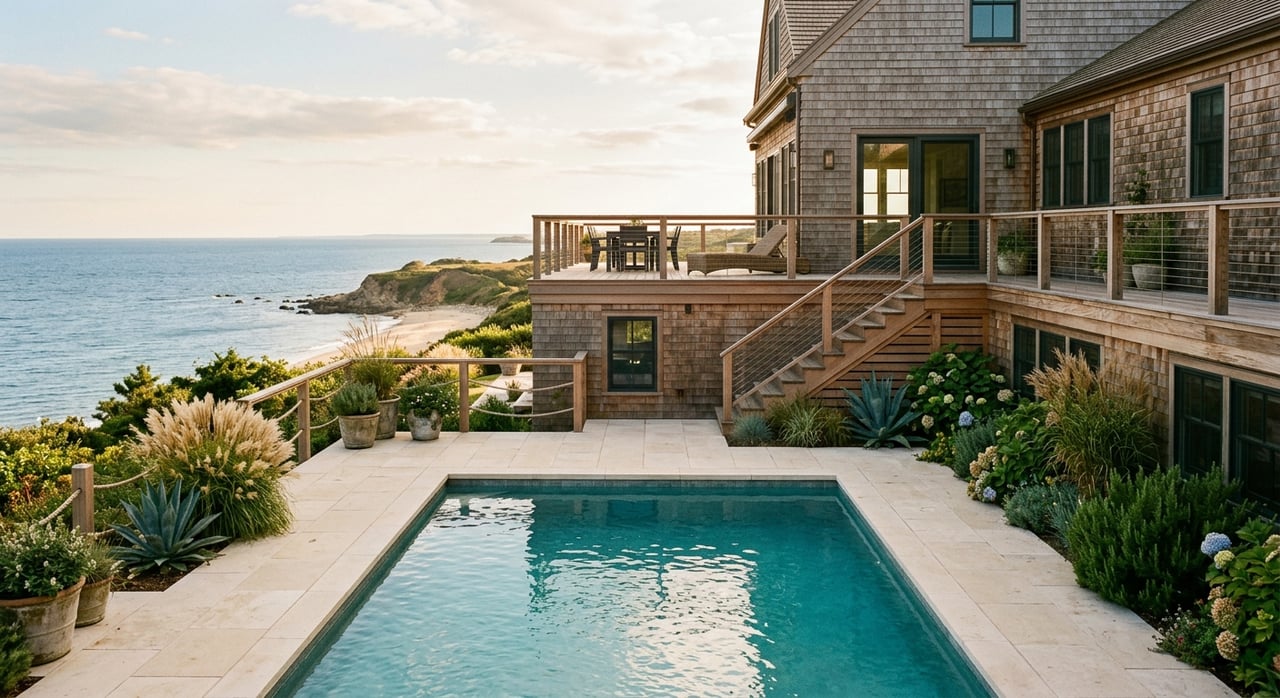
Understanding Duck NC HOA Communities and Resort Options
Wondering whether a home in Duck should come with resort amenities, a simpler neighborhood setup, or no HOA-style structure at all? That question matters more here than in many beach towns because Duck blends town-owned public spaces with private community amenities, and there are no municipally owned beach accesses or soundside beaches in town. If you are buying a second home, a vacation rental, or a full-time coastal property, understanding how each community works can help you avoid surprises and choose a home that truly fits your goals. Let’s dive in.
Duck is shaped by both public amenities and private neighborhood access. The town offers Duck Town Park, the nearly one-mile Duck Boardwalk, and the six-mile Duck Trail, which all add to everyday convenience and outdoor enjoyment.
At the same time, many subdivisions rely on their own private or shared beach and sound access. Since the town does not provide municipally owned beach accesses or soundside beaches, the access pattern of a specific community can have a major impact on how you use your property.
That is one reason Duck buyers often compare communities just as carefully as they compare homes. In this market, the neighborhood structure is not just background detail. It is part of the ownership experience.
In Duck, you will often see communities that feel more like resorts alongside neighborhoods with a lighter amenity package. Both may have owners' associations, but the lifestyle, upkeep, and recurring costs can look very different.
A resort-style community usually includes a broader set of shared features such as pools, fitness space, recreation buildings, courts, piers, or private access points. A lighter HOA community may focus on just a few essentials, such as beach access, a shared pool, or basic common-area maintenance.
For you as a buyer, the real question is not which model is better in general. It is which one best matches how you plan to use the property.
Several well-known Duck communities show what a more amenity-rich ownership experience can look like.
Four Seasons is a gated ocean-to-sound community with one of the most complete amenity packages in Duck. Amenities include a clubhouse, indoor pool, fitness facility, summer trolley, outdoor pool, soundside pier, playground, shuffleboard, basketball, tennis, pickleball, and sidewalks to two private beach accesses.
It also connects by bike path into the Village of Duck. For buyers who want a more turnkey community setup, Four Seasons is a strong example of how shared amenities can support both lifestyle use and vacation-rental appeal.
Duck Landing sits in the heart of Duck and is described by its management company as the closest community to Duck Town Park and the boardwalk. It offers private beach access, a recreation center with fitness equipment, a game room, an indoor pool, a tennis and pickleball court, and a playground.
That combination can be appealing if you want community amenities while staying close to the center of town. Location within Duck can be just as important as the amenity list itself.
Schooner Ridge is a 94-lot single-family community in the heart of Duck. Its amenities include a recreation center with an indoor pool, workout equipment, a game room, a racquetball court, a second pool, two tennis courts, playground equipment, and a third oceanfront pool at the beach access.
For buyers comparing value, this is a good example of a community where shared facilities can cover many recreation needs without requiring you to create those amenities on your own property.
Not every buyer wants a full resort setup. Duck also has neighborhoods with fewer shared amenities and, in some cases, a more straightforward ownership feel.
Tuckahoe is a community of 83 private home sites between the Atlantic Ocean and Currituck Sound. It includes a large community pool, pool house, tennis court lined for pickleball, walkways to the beach and sound, plus a private pier and gazebo on the sound.
This type of community can appeal if you want meaningful shared access and recreation without the broader resort-style package found elsewhere.
Sea Ridge and Osprey are smaller oceanside neighborhoods in Duck. Both are described as a short walk or bike ride into town, and they share a pool, with pool membership optional for owners.
That optional structure may be attractive if you want flexibility and prefer not to pay for every amenity whether you use it or not. It also highlights how different HOA setups can be from one Duck neighborhood to another.
OceanCrest is an ocean-to-sound community with a pool and tennis court. It is also a short walk or bike ride to downtown Duck.
For some buyers, that balance is ideal. You get a few shared amenities and a convenient in-town feel, without stepping into a larger resort-style environment.
In North Carolina, many planned communities are governed by the Planned Community Act. Associations generally have authority to adopt and amend rules and budgets, collect assessments for common expenses, and maintain, repair, and replace common elements.
The law also provides for a hearing process before fines or suspension of privileges in many cases. In practical terms, that means communities with more amenities often come with more governance, more rules, and more recurring costs tied to upkeep.
If a property is a condominium rather than a lot-based HOA neighborhood, the North Carolina Condominium Act may apply instead. That distinction matters because condo ownership and single-family HOA ownership can involve different documents, responsibilities, and disclosures.
Before you move forward on a home in Duck, it helps to review the community documents as carefully as the house itself. This is especially important if you are comparing a second home for personal use with a vacation-rental investment.
Core documents often include:
North Carolina also requires an owners' association disclosure statement. That disclosure identifies whether the property is subject to an owners' association and mandatory covenants, the association contact information, regular assessments or dues, whether dues pay for services, whether special assessments have been approved, whether there are lawsuits or unsatisfied judgments, and whether there are transfer-related fees.
For condominium resales, disclosure requirements are more detailed and can include the association budget, reserves, common-expense assessments, special fees at closing, liens, insurance, use fees, and zoning or land-use information. If you are deciding between a condo-style property and a single-family home in Duck, these details deserve close attention.
In Duck, carrying costs go beyond association fees. For fiscal year 2025-2026, the town tax rate is 0.1800, and Duck also lists beach nourishment municipal service district rates of 0.0798 in MSD-A and 0.1890 in MSD-B.
If you are considering transient rental use, Dare County levies a 6% occupancy tax on transient rentals of private residences and cottages, with exceptions for rentals under 15 days per year or stays of 90 or more consecutive days. For investment-minded buyers, that means you need to look at the full cost structure, not just the purchase price and HOA dues.
Infrastructure matters too. In most cases, Duck properties use on-site private septic systems, while Dare County handles septic permits, and water service is provided by the Dare County Water Department.
That makes septic condition and permit history important parts of due diligence. On the Outer Banks, ownership decisions often come down to both lifestyle fit and practical maintenance realities.
Even in a private community, town rules still shape day-to-day ownership. Duck states that there are no public motorized boat ramps, and ocean-beach launching is prohibited.
The town brochure also says street-side parking is prohibited on state roads and most private roads. Golf carts may operate only on side streets within town and may cross NC 12 at a right angle for beach access.
These details may sound small at first, but they can influence how easy a property feels during peak season. If you plan to use a home often, rent it out, or host guests, these local rules are worth understanding early.
The best community for you depends on how you want to live in the home. If you want a turnkey second home with built-in recreation and easy shared access, a resort-style neighborhood may offer the convenience you want.
If you prefer a quieter setup with fewer shared facilities, a smaller HOA community may be the better fit. In Duck, there is no one-size-fits-all answer because each neighborhood balances access, amenities, rules, and costs differently.
For many buyers, the smartest approach is to compare these communities through two lenses:
That side-by-side view can help you choose with more confidence and fewer surprises.
If you are comparing communities in Duck, a local perspective can make the process much clearer. Inna Pencheva can help you evaluate how a neighborhood’s amenities, documents, carrying costs, and location align with your goals, whether you are buying a second home, an investment property, or your next place on the Outer Banks.



Contact Inna today to start your home journey. With a commitment to education and transparency, she guides clients confidently through every step of the buying or selling process.
