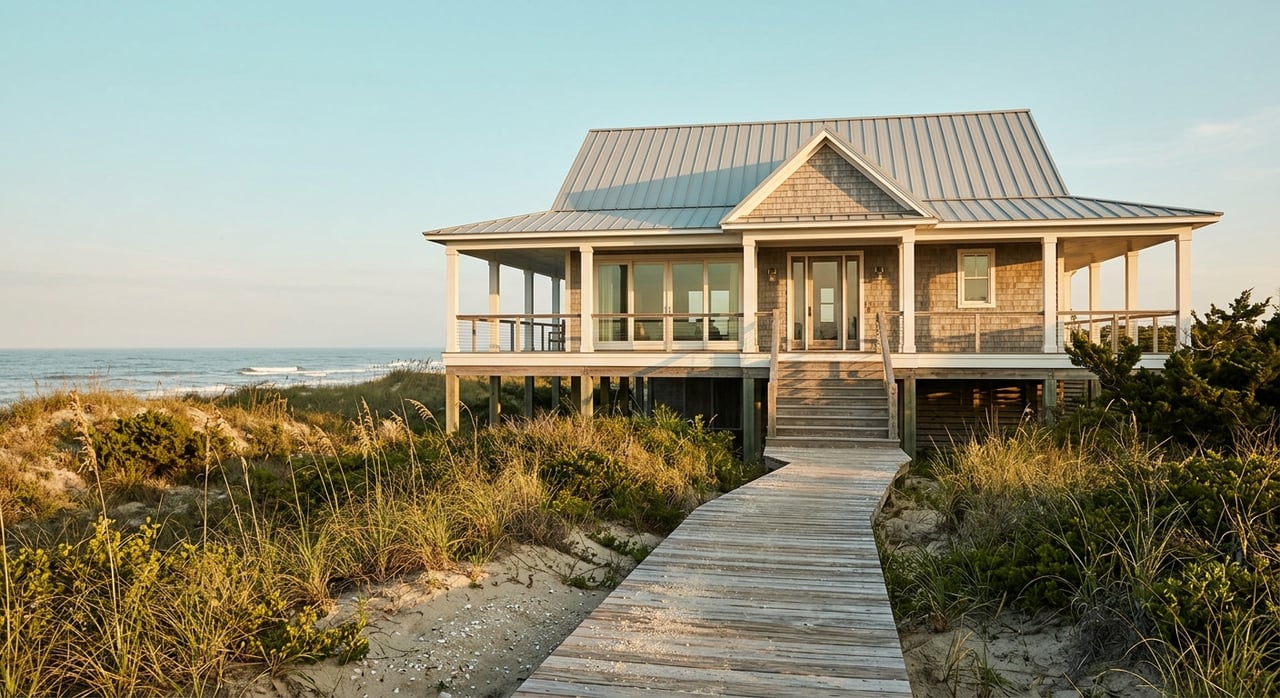
Living in Duck NC: A Closer Look at the Lifestyle
If you picture Outer Banks living as crowded boardwalks and public beach lots, Duck may surprise you. This small coastal town feels more like a carefully managed village, with a walkable center, a strong connection to nature, and a daily rhythm shaped by the water. If you are wondering what it is really like to live in Duck, NC, this guide will help you understand the lifestyle, the pace, and what sets this community apart. Let’s dive in.
Duck is the northernmost community in Dare County, and it has a notably small footprint. The town was incorporated in 2002, and the 2020 Census counted 742 residents, which helps explain why it feels more intimate than many beach destinations.
The town describes itself as a sound-to-sea barrier-island community with a focus on clean waters, beaches, maritime forests, wetlands, and dunescapes. In everyday life, that translates into a place that feels organized, scenic, and centered around a compact village core instead of a large commercial strip.
One of the biggest lifestyle differences in Duck is how easy it is to get around without constantly getting in your car. The town calls itself a pedestrian first community, and that is more than a slogan.
The Duck Trail is a six-mile multi-use path that runs the length of town. In the village commercial area, you will also find sidewalks and designated bike lanes on both sides of Duck Road, which makes it easier to move between shops, dining spots, and outdoor spaces.
For many residents, that walkable setup becomes part of the routine. You can head out for a morning walk, bike through town, or enjoy an evening stroll without feeling disconnected from the rest of the community.
Duck’s soundside boardwalk adds another layer to daily living. According to the town, the boardwalk extends nearly a mile, stays open from dawn until 1:00 a.m., and connects the park with retail and dining spots in the village.
That means the boardwalk is not just a scenic extra. It is part of how people experience the town, whether you are meeting friends for dinner, taking in a sunset, or enjoying a quieter walk along the water.
The Duck Town Park includes 11 acres of maritime forest, willow swamp, open green space, walking trails, a kayak launch, transient boat slips, a playground, and an amphitheater. For residents, that creates easy access to outdoor recreation without leaving town.
The town also maintains these spaces with clear rules. For example, bikes must be walked in the park, and golf carts, mopeds, and Segways are not allowed on the trail, which helps preserve the slower, pedestrian-focused atmosphere.
This is one of the most important things to understand before moving to Duck. Unlike some beach towns, Duck does not function as a public parking beach destination.
The town states that it does not own or maintain public beach access locations. Beach access is limited to residents, renters, and their guests through privately owned and maintained access points, and there are no public parking areas at beach accesses.
For some buyers, this is a major plus because it supports a more controlled and less crowded beach experience. For others, especially if you are used to easy public parking and drive-up access, it may feel less convenient.
Duck also has tighter rules around beach driving than some coastal areas. The town notes that vehicles are not permitted on the beach from March 16 through November 30, and there are no public vehicle access points within town.
If your ideal beach day involves driving onto the sand, Duck may not be the right fit. If you prefer a quieter and more managed shoreline experience, the town’s approach may be exactly what you want.
While beach access is more private, Duck does offer public soundside access options. The town provides a kayak or canoe launch at Duck Town Park, along with two day-use boat piers that have four slips each.
That setup works well if you enjoy low-key time on the water. At the same time, the town does not offer a public soundside beach or a public launch for motorized personal watercraft, so the soundside experience is more limited and specific in purpose.
Duck is not built around big-box shopping or a large commercial district. Instead, the town highlights an eclectic mix of independent businesses, with Duck Village described as the heart of town.
You will find retail, dining, and gathering spaces concentrated in a compact area. That gives the town a social center without making it feel overly busy or overbuilt.
The town’s official materials emphasize independent businesses, eateries along the boardwalk, art galleries, and shopping in the village commercial district. Duck is also described as offering fine dining, world-class shopping, and a nationally known jazz festival on its town homepage.
For residents, that usually means you can enjoy a polished coastal lifestyle with local flavor, but in a smaller-scale setting. You are not getting a major urban retail environment. You are getting a village-style mix that is part of Duck’s appeal.
Duck has a strong event calendar, and that shapes what living here feels like throughout the year. The town hosts free summer concerts on the Town Green, a 4th of July parade and community celebration, the Duck Jazz Festival over Columbus Day weekend, and a Yuletide Celebration in December.
You can explore many of those activities through the town’s summer events and recreation information. Because Duck also identifies its economy as tourism based, the town tends to have a more seasonal rhythm than a mainland community.
That does not mean life stops outside peak season. It means your experience may shift throughout the year, with busier stretches tied to visitors and events, followed by quieter periods that many full-time and second-home owners appreciate.
Duck’s identity is closely tied to its environment. The town emphasizes clean waters, beaches, wetlands, maritime forests, and dune landscapes, which creates a setting that feels visually distinct and closely connected to the natural surroundings.
Duck is also a designated bird sanctuary, and the town notes that nearly 400 bird species have been reported on the Outer Banks and surrounding waters. If you value wildlife, open views, and a setting that feels less urbanized, that natural character is a meaningful part of life here.
Duck tends to appeal to buyers who want a scenic, walkable coastal town with a strong sense of place. If you like the idea of moving between the beach, the boardwalk, local dining, and community events with relative ease, Duck offers a lifestyle that is hard to duplicate elsewhere on the Outer Banks.
It can also be an appealing choice if you are looking for a second home or a property in a community with a polished village center and a more controlled coastal experience. Buyers who value outdoor access, independent businesses, and a quieter residential feel often see Duck as a standout option.
Duck may be less ideal if you want broad public beach access, public parking at the beach, or the convenience of casual drive-up shoreline use. It may also feel too compact if you are looking for a larger everyday commercial core.
That does not make Duck better or worse than another Outer Banks town. It simply means the lifestyle is specific, and finding the right fit depends on what matters most to you.
Because Duck has such a distinct setup, it helps to work with someone who understands how the town functions day to day. Walkability, access patterns, seasonal activity, and the feel of the village core can all shape whether a property matches your goals.
If you are considering a home in Duck, whether as a primary residence, second home, or investment property, working with a local expert can help you weigh not just the home itself, but how the lifestyle aligns with what you want. If you would like guidance tailored to your goals in Duck and across the Outer Banks, connect with Inna Pencheva.


Contact Inna today to start your home journey. With a commitment to education and transparency, she guides clients confidently through every step of the buying or selling process.
