The Duck Nest on the Beach Right Now Is a 60-Day Clock
On a Saturday morning in early July, a Network for Endangered Sea Turtles volunteer walking the sand between the private accesses put a small square of stakes and orange tape into the dune line north of the village. It was the 34th sea turtle nest of the 2026 season on the northern Outer Banks, and the first thing most Duck residents need to understand about it is that it has almost nothing to do with turtles.
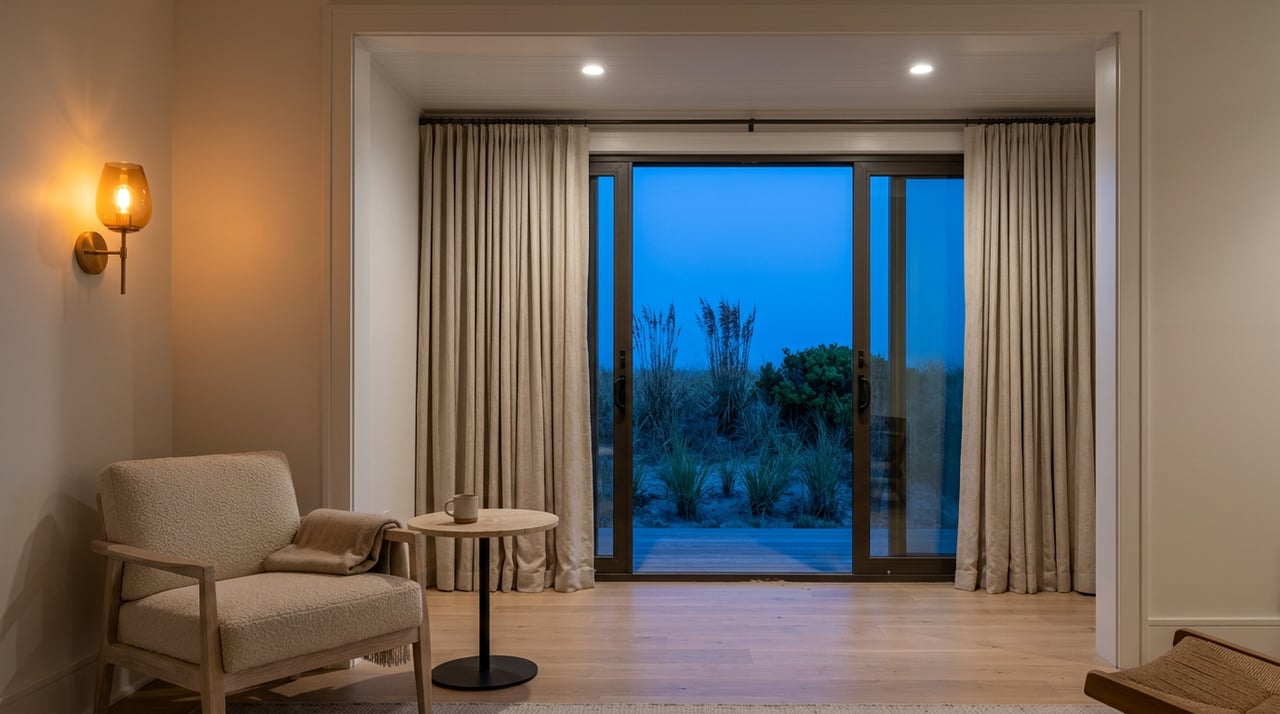
It has to do with the porch light on the primary bedroom. It has to do with the chair the neighbors leave folded against the dune fence. It has to do with the pool decking that stays lit until midnight for guests coming off the beach. From mid-July through mid-September, a nest inside town limits quietly changes what a beachfront household in Duck can leave running overnight, and most owners here have never been told that out loud.
The Outer Banks Voice reported that N.E.S.T. identified the Duck loggerhead nest on Saturday, July 11, 2026. It sits within the 34-mile stretch the group monitors between the Virginia line and South Nags Head. N.E.S.T. President Tony Parisi told the paper the season is running "a little higher than average" so far, with 30 of the 34 nests confirmed as loggerheads and Nags Head leading at 14. Duck, Corolla, Kitty Hawk, Southern Shores, and the 4WD area of Currituck are each sitting between three and five.
The number that matters is not 34. It is 60. Loggerhead incubation runs roughly two months, which means a nest laid on July 11 in Duck has a hatch window opening in early September. A May 30 nest, the season's first at Southern Shores, was due to boil in late July. Any Duck homeowner along the oceanfront should assume the beach in front of the house is on the clock through Labor Day and probably deeper into September.
| Nest laid | Hatch window opens |
|---|---|
| May 30 | Late July |
| Mid-June | Mid-August |
| July 11 (Duck) | Early September |
| Late July | Late September |
A boil almost always happens at night, and it is what the ordinance and the light rules are really written for.
Duck's beach ordinance is short, and the sea turtle clause is one sentence. It is unlawful for any person to willfully harm, harass, or otherwise disturb any sea turtle, nest, or eggs. The Sanderling Property Owners Association restates the same clause inside its own community rules because the private HOA cannot override town law and does not try to.
What that clause looks like in practice on a Duck beach in July:
None of this is new. What is new, or at least newly relevant, is that a marked nest may now sit within a five-minute walk of the house, which changes the risk profile of an ordinary evening.
Hatchlings orient toward the brightest horizon. On an undeveloped beach that horizon is the ocean, lit by moon and starlight. On a developed beach it is whatever LED fixture on the back of a house is aimed even slightly toward the sand. The Florida Fish and Wildlife Conservation Commission publishes the working standard most coastal jurisdictions borrow, and its three golden rules translate cleanly to Duck.
Keep the fixture as low as possible. Keep the bulb at the lowest wattage that does the job. Use only long-wavelength light, meaning amber, orange, or red at 560 nanometers or greater, and shield the fixture so the bulb is not visible from the beach.
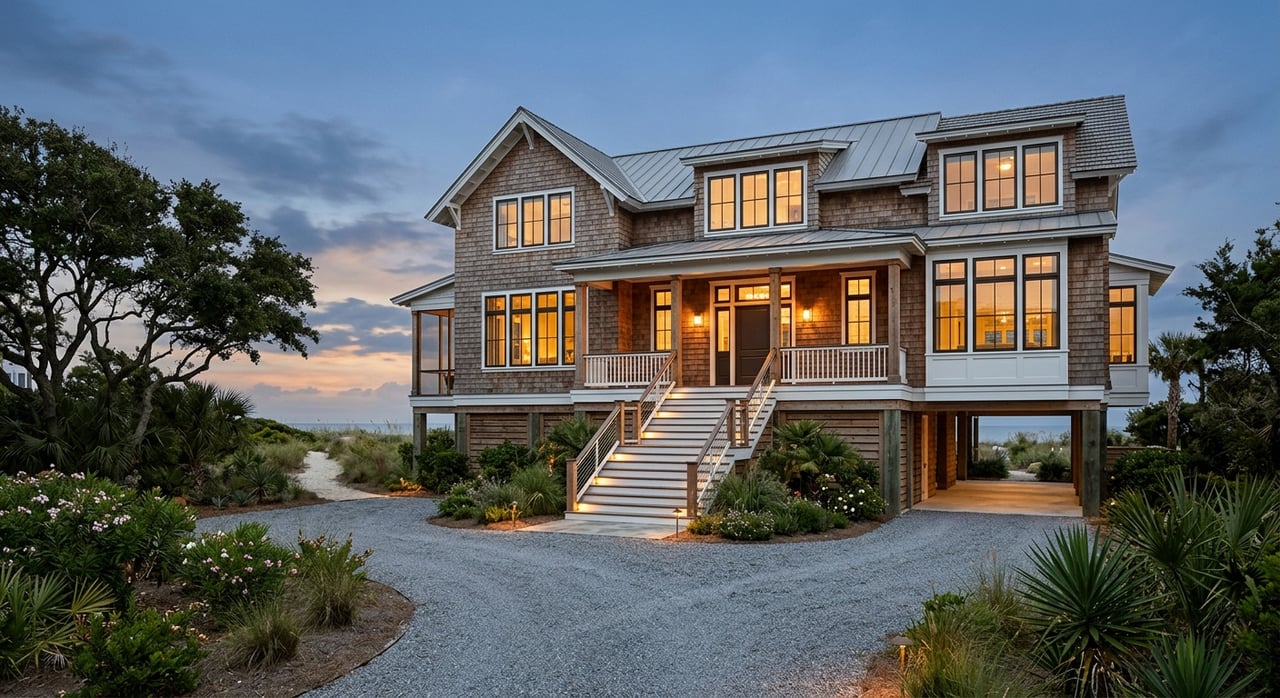
For an elevated Duck home with a deck facing east, that is not a small ask. It means auditing everything that faces the ocean from May through October: the sconces on the upper deck, the string lights over the outdoor dining table, the pool light that reflects off the water and back up onto the underside of the deck, the interior lamp visible through the primary bedroom slider. FWC recommends interior tints as low as 15 percent for ocean-facing glass, but a closed blackout curtain during known hatch windows accomplishes the same thing at zero cost.
The specific move that helps most in Duck: swap the beach-facing exterior fixtures to amber or red LEDs for the season, and rely on curtains for interior light. Runner lights along the boardwalk to the dune crossover are the single most common offender, and they are almost always ornamental rather than functional.
N.E.S.T. does not publish nest coordinates, and the reason is practical rather than precious. Posted locations draw parked cars, blocked driveways, and neighbor complaints, which erode the volunteer relationships that make nest monitoring possible in a town of privately maintained accesses. The organization's own guidance is to walk the beach around sunset near the end of a known incubation window. If a volunteer team is set up quietly beside a marked nest, sitting down and joining them is welcomed.
For a resident, that is a better weeknight in August than most of what is on the calendar. It also builds the informal knowledge that lets a neighborhood self-police the light and dog rules without anyone getting a citation. The homeowner two doors down who has sat with a boil is the homeowner who remembers to close the curtains in September.
The Cape Hatteras National Seashore, for scale, logged 250 nests as of July 10, up from 218 total in 2025. Outer Banks Forever runs an Adopt A Sea Turtle Nest program with $100 symbolic adoptions supporting the park's monitoring work. That is a Hatteras and Ocracoke program rather than a Duck one, but the model is worth knowing about if a household wants to participate financially in a system that does not fundraise inside Duck itself.
Three things, and they are small.
Curtains on ocean-facing windows close at dusk from now through the end of September. Exterior bulbs on decks and dune crossovers that face the beach get swapped for amber or red for the season, or switched off after 9 p.m. The last person off the beach fills the holes and folds the chairs into the house rather than tucking them behind the dune fence, which is a violation for erosion reasons independent of the turtles.
That is the whole protocol. It is not onerous. It is the difference between a Duck oceanfront that keeps its off-leash beach privilege and its dark-sky nesting habitat, and one that quietly loses both to complaints and citations over the next decade.
The nest that N.E.S.T. flagged on July 11 will most likely boil sometime around the second week of September, give or take a warm week of sand. Between now and then, the beach in front of your house is doing work.
If you own on the Duck oceanfront and want a straightforward walkthrough of what your specific stretch of beach and your specific rental calendar require during nesting season, Inna Pencheva is happy to sit down and talk it through. Let's Connect.
Contact Inna today to start your home journey. With a commitment to education and transparency, she guides clients confidently through every step of the buying or selling process.
